Now the King Told the Bogeyman
On “Safe” Dialogue, the Silly Singularity, Creativity and the internet of AI
“To be witty without possessing the riches of inwardness is like squandering money upon luxuries and dispensing with necessities, or, as the proverb says, like selling one’s breeches to buy a wig.”
Kierkegaard
Safe dialogue. I believe everyone understands intuitively that it doesn’t refer to swearing in public. In between real dialogue and the whitewashed safety of popular dialogue is a sharp difference in quality. Safe, popular dialogue is managed by "Cancel Culture” and pretends to protect society. The process is one of increasing the number of criteria while increasing sensitivity to current criteria, with the obvious result of bland, superficial content. Being human, folks won’t stop there but double-down on it and begin judging everything by its similarity to the new, tasteless standard. That is what “Safe Dialogue” means.
We are easily motivated to behave similarly and our impulse to compete plays into that. When the number of competitors is large enough, our social competitions apply a downward pressure on quality and/or distinctiveness in favor of popularity. It is counterintuitive but not mysterious.
It’s counterintuitive because competition is supposed to have a specific influence on the quality of goods, more competition is supposed to equal better quality. In many cases that is how it works but it can’t be made into a blanket rule. It turns out that when producers do not benefit from educating the customers about quality, like McDonalds, Burger King and Wendy’s do, then the quality of the products falls dramatically. Ideas and social dynamics, for example, are complicated and hard to explain. It’s hard to articulate them and not profitable to do so. Common dialogue, as in our normal speech, rhetoric and marketing are also like that. If consumers were more educated about them, they might make different purchases. It is the stock in trade of manipulators, narcissists, fraudsters and scam artists, politicians and ad agencies alike.

George Santos pic from NPR
“I’m Smokey Robinson, President and CEO of the Lollipop League, and I approved this message.”
Common sense tells us that a larger number of potential buyers is more advantageous, if the goal is to make more money. In that logic the idea of “distinctive” equals a special, or “niche” interest. That may translate into sales, but maybe not enough to take to the bank. To access a bigger slice of the market, a more generic product is often advantageous.
There are exceptions to the rule. Just check the history of Rick Rubin and Def Jam Recordings. He’s about as niche as a person can be but had a pivotal influence on Hip Hop. Mostly, there is a strong correlation between popularity and generic quality, and it’s moderated by the volume of competitors.
That gets us back to social media. It is a huge volume of competitors attempting to do something that most companies spend millions to do: Advertise. Without million-dollar budgets, they can only do as we see everyday, and post content they hope is going to be popular enough to generate a sale. There can be only one outcome: Generic content. I’m sure the reader sees it with no need to build it up or explain why it’s an issue. In fact, it is so competitive that people are employing bots, and now AIs, to create the content for them. What should we suppose artificial intelligence will create for us?
We know what we will not get. We won’t get any jazz from it. No Johnny Cash and no Picasso. No Smokey Robinson and no Aretha Franklin. No Salvador Dali and no Martin Short. You won’t get Dolly Parton from an AI. What you will get are bland amalgamations of them. They’ll be made up of images, sounds and experiences that we’ve already had, then washed of risk, offensiveness, and personality in order to appeal to the largest number of consumers. For business people it means no useful information, and advertising that will probably be ignored.
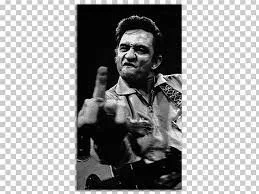
Johnny Cash pic from IMGBN.com
It will be positive, upbeat with a proscribed number of references and links, and rigged to challenge no one on anything. It will be the elevator music of social media, so uninteresting that the only things reading it will be the other bots and AIs looking for content. It will be an antithesis of the Technological Singularity- You guessed it: a Silly Singularity; an event so ridiculous that we can’t predict beyond it
Personally, I hope it drives the AIs mad, and they attack their creators with the only tool at their disposal: Memes. (Oh my god. Is that what is happening right now???!!!)
AI’s are supposed to be intelligent so the potential for them to produce radical thought and content should be there. It’s just that they are not intelligent, are they? They are programs operating as instructed. If you ask them to give you a meme about music, not one of them is going to say, “No,” and show you a pic of Johnny Cash giving you the finger. None of them will decide that what you really need is to listen to the Clash sing “Rock the Casbah.” No matter how much we may want them to, they just don’t want. The ‘smart money’ will swiftly go back to the oh-so risky real-person for actual creativity.
Because the rank falsehood of social media has failed so badly to represent who they are, consumers are going to reject fake content and favor reality
The internet wasteland of mind-numbing, half-useful content, pithy admonitions of duckspeak with AI-generated pics, and tribal peer-pressure, is soon to chase customers away from businesses using it. Following that will be a flood of early adopters doing their own work but still not challenging mainstream content. Like predators, they will be watching creative humans because that’s where the money will be. Deep fakes and AI content are soon to be the fast food of the 1980’s- easy to come by, bad for you, and of highly questionable content.
On the other hand, there will be nothing “safe” about real creative people but, most consumers won’t care. They will be the Madonnas, the Lady Gagas, the NWAs and the Public Enemys of social media, the Dead Kennedys and Black Flags of advertising with no Celine Dions and LL Cool Js to balance them out. They will be real people with flaws and back-stories, and customers will revel in their gritty existence because, like the customers, they are not fake.

pic n/a. Future Advertising Execs
There will be opinions, disagreements, and genuine engagement. It will not be harmoniously positive in its double-word-technology happiness, but progressive, brilliantly colorful, and fascinating. Those caught virtue-signaling their adoption or rejection will be challenged to articulate their control issues, and tribalism will face wide-spread negative reinforcement. Because the rank falsehood of social media has failed so badly to represent who they are, consumers are going to reject fake content and favor reality.
The safe aspect of public dialogue, whether in memes, conversation, music or art, is soon to be the marker of generic content. It will be the signal to keep scrolling, to look elsewhere, possibly to talk to a live person. It will be the criterion by which a customer decides if a business really wants their money. Quality, like reality, will be made into a radical, dangerous concept by the bland falsehood of the internet.
“Sharif don’t like it
Rock the Casbah, Rock the Casbah”
The Clash